Posts

Snapshot: a lens to avoid

Image
Olympus is selling its camera business to a Japan investment company. The Olympus M.Zuiko 14-42mm lens may be a reason why. The lens came with a second-hand Olympus E-PL1 camera, as its standard kit lens. It’s a very sharp, fast-focusing lens. Until you zoom out to 25mm. Then, the lens refuses to focus. At all. It took less than 60 seconds to find multiple threads on DPReview.com that confirmed how widespread this issue has become. Judging from a few posts describing owners’ conversations with Olympus technical support, the company knows about the problem. And hasn’t acknowledgeD the lens’ circuitry issue. The troubled lens is easy to replace. But that’s not the point.  I treasured several Olympus film cameras, and owned a Tough series compact digital. But a company needs to stand behind its products. Or lose its customers. Sigma — a lens manufacturer of fine pedigree — updated the firmware in one of my lenses when it no longer functioned with a new camera body. At no charge. Which...

Travels with a Fujifilm Z90

Image
Point-and-shoot digital cameras -- even good ones -- have become semi-relics in the iPhone era . But compact digital cameras aren't pricey paperweights. They can do the job. And on the used market, good P/S cameras can be had for $5-$25 dollars.  Really.  After a downpour.    A local thrift store last week sold me a tiny  Fujifilm Finepix Z90 camera for $3.99. That's no misprint. A 12-megapixel, 5X zoom camera smaller than any smartphone. Under $5.  It's no Leica , of course. In default "SR auto mode," the camera chooses high ISO settings for daylight photos. (Tip: use Program mode, set ISO yourself.) But with a wide-angle to zoom 28-140mm lens (in 35mm terms) and HD video, a nine-year-old camera that outperforms most phones is a fair deal. You can skip eBay, and still land great deals. You get a couple of extra benefits: In this case, the camera came with a case, SD card, and battery. This isn't always so with thrift-store cameras. You need to check the c...

Tracking my missing negatives

Image
What do Walgreens and CVS drug stores do with the film negatives that aren't returned? Mystery solved. But hardly satisfying. . I've probed this since my Aug. 2016 post . When I asked Walgreens why they don't return negatives with photofinishing orders, a manager called me. He explained that his store sends all film processing orders to District Photo, a Maryland wholesale lab. They send nothing back to the stores -- prints or negs, he said. Image files scanned from negatives are transmitted to the store, where prints are produced and the files are written to a CD. This led me to District Photo, where a polite woman named Ruth informed me that District's contract with Walgreens specifies no return of negatives. That's at Walgreens' request.  District retains the negatives for 30 days, then destroys them. So, Walgreens says it's District's issue. District says Walgreens tells them not to return the negatives. Amid the online finger-pointin...

The camera I didn't buy

Image
I ran across a Nikon N2020 in a thrift store last week. It would make a great doorstop, or maybe a prop in a war movie. By dw_ross from Springfield, VA, USA (20121213_1371) [CC BY 2.0 (http://creativecommons.org/licenses/by/2.0)],  via Wikimedia Commons The bottom plate was partially unscrewed. A thin patina of dust covered its surface. You couldn't read half of the control labels on the body. Nikon made many rugged 35mm single-lens reflex cameras. The N2020 wasn't one of them, despite being the company's first autofocus SLR model. I'm a long-time Nikon SLR owner. But I let it go. Some owners baby their cameras. Others toss them in a backpack and neglect them. And there's no hard-and-fast rule about which holds up better. SLR cameras of the 1970s and 80s were built with metal frames, but plastic soon took over. If you find a $10 Nikon in a thrift store, it's likely to need more than a dusting off and a fresh battery. Compact point-and-shoots are a...

Silver theft on Aisle 3

Image
If you shoot film and have it processed at a drugstore, watch out. Walgreens and CVS are trying to steal your silver. By Eastwind41 (Own work) [Copyrighted free use], via Wikimedia Commons That's the only possible explanation as to why they no longer return your negatives when you develop color negative film. Instead of giving you prints with negatives in your photofinishing envelope, they give you prints and image files on a CD. You don't get your negatives back. By SkywalkerPL (Own work) [CC BY 3.0], via Wikimedia Commons Why? The film contains tiny particles of silver, which can be extracted and recycled, usually benefitting the photo lab. Companies used to offer kits that allowed labs to recover the silver, and you'd get your negatives back. But that technology likely isn't widely offered, since film processing declined. This page of Kodak's website talks about the process. The labs want to keep the silver. So you don't get your negatives ...

Three things to know about the Canon Canonet 28

Image
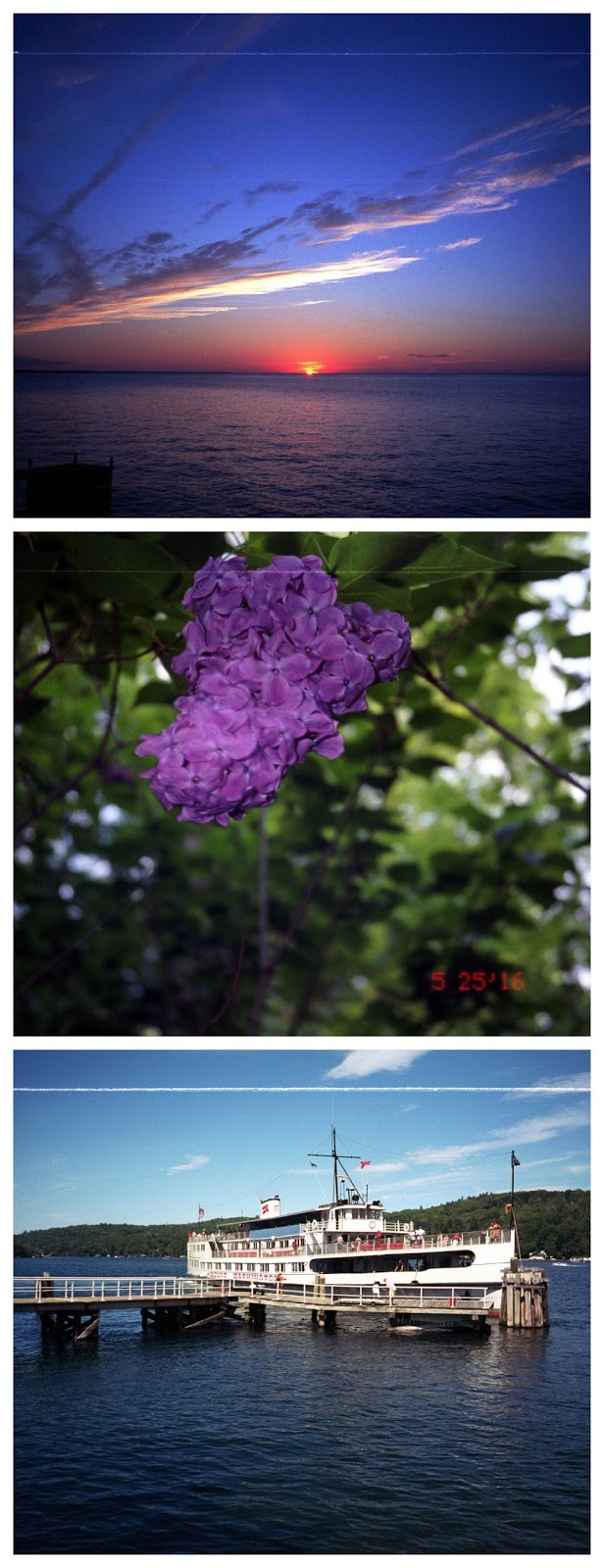
Rangefinder cameras from the 1970s had fast lenses and enabled you to control the lens aperture. They were quiet. And, if you were confronted by muggers, a weighty Canonet on a neck strap could be used as a defensive weapon. The downside? They used mercury batteries that were outlawed by the 1990s. Their foam light seals dissolved into gunk by the early 2000s. They didn't have built-in flashes. And some owners struggled to load the film correctly. These photos came from my Canon Canonet 28 , shot on very expired Kodak 200 print film. I hadn't seen the camera for years. (The Parkside photos were shot years ago; the flower images are more recent.) The photo processing was questionable, too. See that white squiggle in the price list shot? Dust on the negs.( More on drugstore photo processing another time.) You'll find Canon Canonets on eBay and thrift shops. If the shutter and rangefinder focus work (they don't need a battery), buy one. But, keep these thr...

10 Pretty Good Five-Dollar Cameras

Image
Your iPhone or Android might take pretty good photos. For $500+, it ought to take photos Annie Leibovitz would buy. But it doesn't. It's more like the world's most overpriced point-and-shoot camera.  Compact 35mm film cameras from the 1970s-1990s are my Kryptonite. I find most of them in thrift stores, next to audio devices with old 30-pin iPod docks. Those film cameras have better lenses than a smart phone. Flashes that actually light up a scene. They make me think about composing a picture that tells a story. And if I drop a camera I bought at a Godwill or Salvation Army, I'm out a whole $5 -- not $500 plus a pricey screen replacement. I can live with that.  Here's a brief guide to real 35mm cameras worth looking for when you're garage-sailing or cruising thrift stores. You can go retro for just a few dollars, and see if you remember how to compose a photo with a real viewfinder pressed against your brow. 10. Olympus Infinity Twin - a some...

Street shooting with the Olympus Infinity Twin

Image
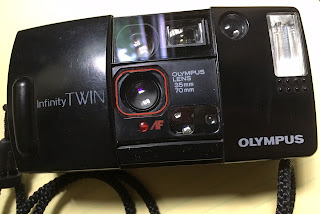
The Oldsmobile of Point-and-Shoot Cameras Olympus Infinity Twin. (c) DKassnoff, 2016 It's a gray brick. Press the shutter button, and you hear the workings of your Aunt Stella's sewing machine. It's a 1988 relic from a time when Olympus believed you only needed two focal lengths: 35mm and 70mm. That's the Olympus Infinity Twin, a thrift-store find that consumed $3.99 and promised a photographic experience comparable to driving my Uncle Arnold's Olds Starfire F-85 around the narrow streets of Bayside, NY. It did the job, but felt clunky in the execution, like the ball joints were shot. The Infinity Twin (known as the Olympus AF Twin in some regions) had a twin-lens design. The 35mm lens was the default, but a button atop the camera activated a mirror that doubled the focal length to 70mm. The 35mm, f3.5 lens was sharper and faster than the 70mm. I'm fond of Olympus' clamshell lens cover design, which first appeared with the Olympus XA film camer...

Ghost hunting: Kodak Star 1035Z camera

Image
At $2.99 in the Goodwill thrift store, the Kodak Star 1035Z camera seemed like a great deal. As long as I didn't think too hard. But I thought twice. In the realm of thrift store camera bargains, I could do better. The Kodak had a slow, 38-80mm zoom lens. And a choice of two flash options: auto or auto with red-eye reduction. No flash-defeat button. Still, at $3, with a case and owner's booklet, and a clean, scratch-free body and lens,  was it worth it? NO. NOT AT ALL. Kodak already sold a version of this camera in the 1990s. I owned one. Its auto-focus had all the accuracy of a Trump speechwriter. The zoom lens trudged to its maximum focal length at snail speed. The infant you wanted to photograph would've learned to crawl, walk, and drive a Big Wheel to kindergarten by the time the camera was ready to fire. And the shutter lag -- the moment between pressing the big gray button and getting the shot -- rivaled that of some older digital cameras. Overall...

Never say "expired;" film never dies

Image
I've lately been shooting with some 35mm film cameras. Partly to determine whether they're worth keeping or selling, and partly because I have rolls of film in my basement that date back to as late as 2006. Kept cool, film can last well beyond the date stamped on the box. But you wouldn't want to risk your pictures from a major event -- wedding, graduation, or vacation -- to film that's out of date. Parkleigh Crystals, Film from 2008 One example: the photo at left: photographed with 200-speed color negative film short-dated from 2008. The camera: Olympus Stylus Epic , perhaps the best fixed-lens compact 35mm point-and-shoot camera ever sold. What does a film camera give you that an equivalent digital camera can't? In a word: soft backgrounds. While most of the colored crystals in this image are sharply focused, the less-important elements are soft and de-focused. This adds emphasis to your main subject, and can help create a mood. You can also get this eff...

24 Hours with a Kodak M583

Image
Had a day to play with a Kodak M583 camera, described in the previous post. A quick summary: Image quality: pretty good, edge-to-edge. Nice handling of low-light/twilight images at 28mm wide-angle. At 224mm full zoom, however, subjects looked softer. OK for general snapshots and travel images in bright daylight. In very low light, the camera could not lock focus on a table candle. Image stabilization (optical) worked well. Camera selected a moderately low ISO 125 for a portrait shot in twilight, and didn't fire its flash, making for nice skin tones and no blowouts. Menus are now so heavily layered that you're really forced to choose your settings in advance, because there's no quick-set beyond the basic "Smart Capture" function. Camera uses a micro SD card, which big-fingered hands will find hard to load and unload. For me, the most challenging feature were the microscopic buttons on the right side of the LCD screen (see the red camera, above). They access menu ...

Separated at birth, sort of

Image
Can you spot the difference between these two digital cameras? The black camera is a new Kodak M583, a 14-megapixel compact with a Schneider lens, 8X optical zoom. The red camera is a GE Power Series E1680W, with 16 megapixels and an 8X optical zoom. To me, they appear to have come off the same assembly line, someplace in Asia. Their prices are nearly identical, too. At the moment, Kmart is offering the GE camera at $20 under the Kodak. On the other hand, 16 MP on a 1/2.3 sensor will probably result in less than satisfactory images. GE is one of those drugstore brands that hardly any camera review website takes seriously. Kodak, on the other hand, said earlier this year that they would re-strategize their camera business to sell only profitable cameras. I'm thinking this meant sourcing some cameras from GE's General Imaging business, just as Hewlett Packard appears to have done.

Can you publish a photo from 2004?

Image
You shot some pretty decent digital photos in the Bahamas in 2004. In fact, they might be useful in a book on travel photography. Can you use them? Maybe, maybe not. If you used a Nikon D70 -- one of the leading digital SLR cameras sold at that time -- you have some pretty sharp files. Six megapixels isn't bad. However, if you went back to Marsh Harbor in 2011 to shoot additional photos, you'd be using a 12- or 14-megapixel camera, likely with a better image processing algorithm. Your 2011 photos will have more detail. And your 2004 photos will pale, in some ways, when compared with your new photos. Documentary photographers who spend years capturing images for a project frequently encounter this issue. Digital advances turn their earlier digital photographs into, well, yesterday's photos. But photos captured on film in 2004 have exactly the same resolution as those captured on film today. Negatives and transparencies from years ago can be scanned into high-resolution digit...

This week's camera: Canon Multi-Tele

Image
I'm a sucker for stretching the limits of 35mm negatives. And, with a little creativity, I get some nice rewards. This week, I'm shooting with a rarity: the Canon Multi-Tele, a 35mm automatic film camera that captures either full-frame or half-frame images. Depending on how you set the selector, you can grab either 24 x 36 or 18 x 24 mm pictures. So a 36-exposure roll of Kodak Portra VC 400 becomes a 72 exposure roll. Why do this? 18 x 24mm is roughly the same size as the sensor in digital SLR cameras, and I'm curious to see if the half-frame images come out with any more clarity or detail than the same-size JPEGs from a Nikon D60. Besides, I get the added satisfaction of driving the photo lab a little bit crazy, as the half-frame adapter required to print "normal-size" prints from the smaller negatives is rarely found. (You can easily create acceptable prints by editing a scan or digital negative). Downsides: the Canon Multi-Tele uses a loud, spring-loaded lens t...

Point-and-Shoot vs. SLR Cameras: What the Author Missed!

Point-and-Shoot vs. SLR Cameras: What Are the Real Differences? Problem with this article: it's written for idiots. The biggest difference between point-and-shoot and digital SLR cameras? DSLRs have larger sensors that capture more light. They'll capture great photos in dimmer light, too. DSLRs also have more processing "horsepower," while p/s cameras ask one chip -- the same one that captures the image -- to do all the computer-type data management and processing. That's why small cameras have shutter lag. All the other differences are aesthetic. If you don't want to carry a four-pound camera, choose a smaller one. Unless you enlarge your photos to fit on the side of a building, you'll probably be pleased with the results from the camera you have with you, rather than the bigger camera you left at home.

Get with the program (and off "Auto")

Image
For a few hours, Woot.com offered the Samsung HZ30W camera today for $129.99. It sold out fairly quickly. But I read with interest the comments left by Wooters trying to decide whether to buy the camera. About half pointed to online comments from previous buyers, many of whom complained that the camera's images were too noisy. I'd guess those users probably did the following: They charged the battery and added a memory card. They turned the camera on. They shot their photos on Auto, and got poor results. "Auto" is the de fault mode on many cameras. The camera makes all the decisions: shutter speed, aperture, flash, and ISO (or sensitivity to light). More often than not, cameras left in Auto mode select a higher ISO (200 or 400) so the flash reaches further. The higher the ISO, the more likely their will be digital noise in your photos. The way around this? Learn how to use the camera's "Program" mode. It's similar to Auto, but it should allow you to...

Layers of sunset: how I made this photo

Image
This photo had little to do with the model of camera I used, or the lens, or anything very technical. It had everything to do with the calendar and the weather forecast. November, 2009 saw a small hurricane called Ida wander across the Gulf of Mexico. Hurricanes leave a trail of clouds. A quick consultation of a good calendar told me when the sunset would take place. A few minutes with the Weather Channel told me where the worst of the storm had gone. All I needed was a camera and a wristwatch. And a boardwalk to shoot from. The camera was a Canon Powershot A630 , one of the great underrated Canons that uses AA batteries and lets you manually adjust shutter speed, aperture, and other settings. The current A-series Canons don't offer this level of control. (The camera itself is no longer made, but used models may be found at online auction, or maybe www.KEH.com .) Exposure details: handheld, 1/1000-second exposure at f4.0, with a -0.67 underexposure to deepen the clouds a bit. Tip:...

It's the sensor, not the megapixels

Image
Last week brought thrills galore in my camera collection. One example: I found a name-brand 12-MP digital camera online, with manufacturer's warranty, for $39.99. Even with $5 shipping, it's still a great deal -- especially since I plan to give the camera as a gift later on. At the other end of the spectrum, I visited Wally World for a few supplies, and wandered past the camera bar, where a salesperson was telling someone why he should by a 12-MP camera instead of a 10-MP camera: "You can make larger 8 x 10 prints with the 12-megapixel camera." I wanted to interrupt the conversation with: "When was the last time you printed an 8 x 10 print?" For many of us, photographic prints are an afterthought. I print only a few photos a year, usually as gifts or to frame and display. When I get a frame-able photo, I have Adorama Pix or KodakGallery do the printing. But most people lean toward 4 x 6-inch prints, if they print at all. (The discontinued camera above is a...

Sounding off on video

Image
Pocket video camera in your future? They've become as popular as most "standard" digital cameras, mostly because of their form-factor. Most pocket video cameras often do less than a digital still camera that shoots HD video. The video cameras usually don't have a zooming lens; almost all digital point-and-shoots have an optical zoom lens. Point-and-shoots offer scene modes for nighttime, portraits, etc., while videocams have only a couple of options: stills or different size videos. And I haven't seen a pocket video camera with a flash or fill-in light, which would help improve still photography. But for all the video choices, I don't understand why so few offer a key feature: dual microphones. Video without audio isn't terrible, but video with poor audio is almost intolerable. Canon and Kodak make cameras with two microphones; the Kodak V1253 pictured above does a pretty decent job, captures HD video, and has a fairly nice feature set in a svelt form fac...

What whine goes with your camera?

Image
Every time I read of someone's disappointments with their new digital camera, the whines fall into three categories: The batteries don't last long at all. The camera manual is inadequate. I can't see the LCD in bright sunlight. Quick answers: Batteries : alkaline batteries weren't ever intended to run a high-drain device such as a mini-computer with an always-on LCD (which is what a camera is). Buy some name-brand rechargeables. I use Duracells, and I've heard good things about Sanyo Eneloop AAs. To avoid frustrating yourself, buy a charger that doesn't require 8 hours to charge your batteries. As for the lithium-ion batteries that come with most cameras: they need to be charged first, then completely drained, then recharged before you get optimal performance. Manuals : Funny, hardly anyone read these things when they came with film cameras. Learn how to download the full PDF version from the CD that came with your camera, or the manufacturer's website. Prin...